

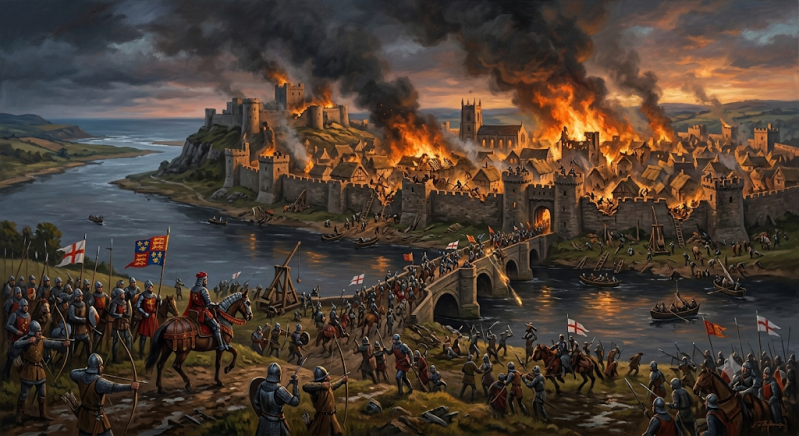
Berwick On The Water
Track Four:
1296 The Start Of The Scottish War's Of Independence


Track 4 Berwick On The Water (1.16 of 3.59)
Berwick-upon-Tweed, a town steeped in history, stands as a testament to centuries of conflict and cultural exchange between England and Scotland. Its strategic location at the mouth of the River Tweed has made it a prize fiercely contested by both nations, leading to its unique architectural and cultural identity. The town's turbulent past is etched into its formidable walls, historic bridges, and winding streets, each telling a story of sieges, treaties, and daily life on the border.
From the Roman era, when its strategic importance was first recognized, to the medieval period, where it changed hands between English and Scottish crowns numerous times, Berwick has witnessed it all. The town's prosperity grew as a vital port, facilitating trade and acting as a military stronghold. Its walls, largely built in the Elizabethan era, are among the best-preserved in Europe, offering panoramic views of the North Sea and the surrounding countryside.
The River Tweed, central to Berwick's identity, has not only been a source of sustenance and trade but also a natural boundary that both connected and divided kingdoms. The iconic bridges – the Old Bridge, the Royal Border Bridge, and the Royal Tweed Bridge – symbolize different eras of engineering and the town's enduring connection to both sides of the border. Today, Berwick-upon-Tweed proudly showcases its dual heritage, a vibrant blend of English and Scottish influences, making it a truly captivating destination. In the 12th and 13th centuries, it was Scotland's most vital and populous trading hub.
The Border Wars and Berwick's Strategic Importance
Berwick-upon-Tweed's location made it a crucial strategic asset for both England and Scotland during the Border Wars. The town changed hands numerous times, reflecting the shifting power dynamics and intense rivalry between the two kingdoms.
The Legacy of Berwick A Unique Border Culture
Today, Berwick-upon-Tweed is renowned for its distinctive culture, a blend of Scottish and English traditions. This dual heritage is evident in its architecture, local dialect, and community spirit.
The town's history is a tapestry of woven with battles, sieges, and diplomatic maneuvers. Its fortifications were constantly improved, with the Elizabethan walls being the most prominent and enduring testament to its military significance.
- Early Conflicts: From the 12th century onwards, Berwick was frequently captured and recaptured, serving as a key stronghold and port for both nations.
- The Battle of Berwick (1296): A pivotal moment where English forces under Edward I massacred many inhabitants and took control of the town, marking the beginning of the First War of Scottish Independence.
- Later Sieges: Even after the main Wars of Independence, Berwick continued to be a contested site, witnessing many more sieges and skirmishes.
- Elizabethan Fortifications: In the 16th century, Queen Elizabeth I ordered the construction of modern, star-shaped fortifications, which are still visible today and a major historical attraction.