


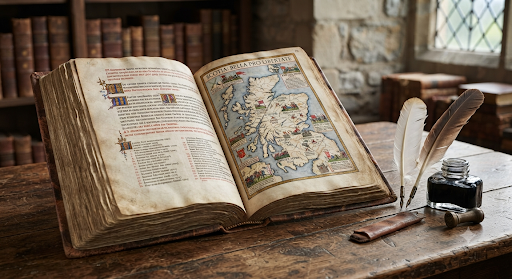
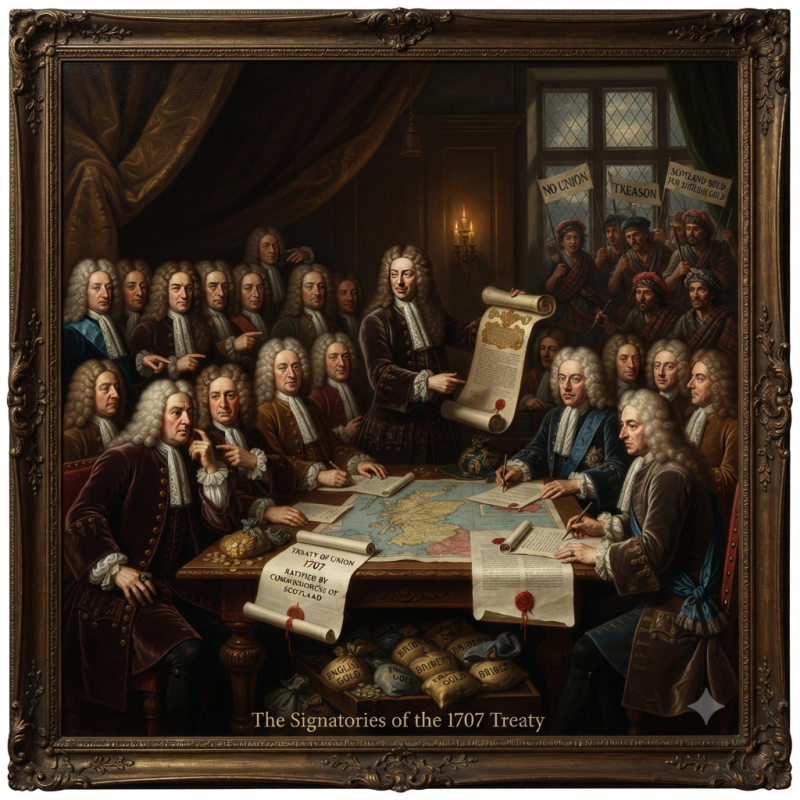
The tragedy of Scottish history is that the gates were unlocked from within. Centuries of battlefield defiance could not shield the nation from economic coercion and parliamentary intrigue. When the 1707 Act of Union formally dissolved Scotland's ancient parliament, it did not happen under the crashing roar of a decisive military defeat, but through the quiet scratching of pens and the dispersal of English subsidies.
As Robert Burns immortalised the national anguish: “What force or guile could not subdue, thro’ many warlike ages, is wrought now by a coward few, for hireling traitor’s wages.”
The realization that a nation tempered by blood and sacrifice could be compromised by debt and political intrigue left a deep, festering wound in the Scottish psyche. The political elite traded away independence to recoup their losses from the catastrophic Darien Scheme and guarantee personal patronage. To the common folk, it was the ultimate treason: a proud kingdom bartered away by a parcel of rogues.
The Spark of Defiance
This burning outrage did not extinguish the Scottish spirit; it ignited the decades of unrest that followed. Burns' bitter verses became the rallying cry for a wounded nation, echoing through the Jacobite Risings, whispered in taverns, and sung on Highland hillsides as a reminder that though parliament was bought, the soul of the country remained unbowed.
Overview
- The Act of Union (1707)—The political merger signed in Edinburgh that surrendered Scottish parliamentary sovereignty in exchange for economic concessions and financial payoffs.
- The Parcel of Rogues—The commissioners and nobles accused of betraying their country for personal gain and English coin.
- Burns' Enduring Anthem (1791)—A passionate poetic indictment that channeled the lingering sorrow and defiance of an unvanquished people.
Double click on CD 2 above to get an overviw of the songs
Such a Parcel of Rogues in a Nation
Track Two captures the bitter cry of Robert Burns' scathing masterpiece, "Such a Parcel of Rogues in a Nation." It lays bare the heartbreak and indignation of 1707, when Scotland's independence was bartered away not by conquest, but through backroom bribes and political betrayal.
Centuries of battlefield defiance against superior forces could not shield the realm from economic coercion and self-serving aristocrats. To a stunned populace who remembered Wallace and Bruce, the Treaty of Union felt like an unforgivable surrender of sovereignty—sold out by their own ruling class for English gold and colonial bailouts.
Robert Burns gave voice to this enduring fury in 1791 with the timeless lament: “We’re bought and sold for English gold—Such a parcel of rogues in a nation!”
A Betrayed Nation
Track 11 Parcel of Rogues (1.06 of 339)
Act of Union 1707: Scotland's sovereignty signed away, immortalised as a nation "bought and sold for English gold."