


Echoes From The Battlefield
The Turning Point
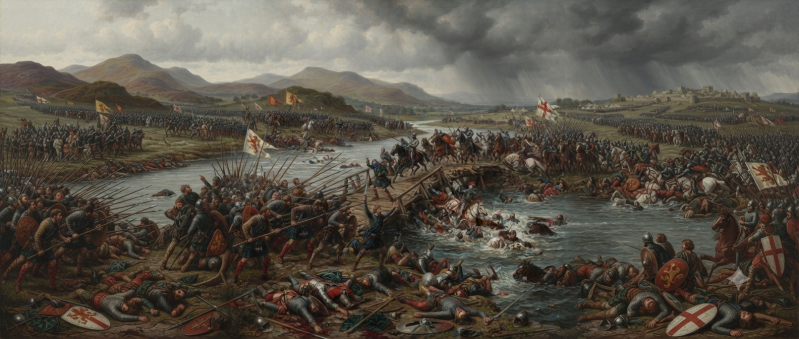
On a cool September morning in 1297, a small, wooden bridge over the River Forth became the stage for one of Scotland's most iconic victories. The forces of William Wallace and Andrew Moray, outnumbered and seemingly outmatched, faced the mighty English army of Edward I.
The English, confident in their numbers, made the critical error of attempting to cross the narrow bridge in force. The Scots, positioned on the high ground, waited patiently. As the English heavy cavalry and infantry slowly funnelled across, Wallace and Moray unleashed their attack, trapping the enemy on the northern bank.
The battle was a masterclass in tactical brilliance. The constricted crossing meant English numbers counted for nothing, as their soldiers were pushed into the river or cut down by the determined Scottish spearmen. Stirling Bridge was not just a victory; it was a resounding declaration of Scottish defiance.
Stirling Bridge
Wallace Monument
Artist Impression


“At Stirling Bridge, the very terrain became an ally. The narrow wooden crossing, so easily dismissed by the English, proved to be their undoing. It was a testament to Scottish ingenuity and fierce determination, where the spirit of freedom burned brighter than any armor.”
The battle raged, a brutal dance of steel and courage. The English knights, accustomed to open battlefields, found themselves entangled in a deadly bottleneck. The Scottish schiltrons, impregnable formations of spearmen, held firm, their long spears creating an unbreachable barrier against the English advance. The cries of battle, the clash of swords, and the roar of the Forth echoed through the valley, a symphony of defiance and liberation.
Track 5: The Battle of Stirling Bridge (1.03 of 3.56)